Permission to Teach
In medicine, everyone has a heart, but that does not automatically qualify them to perform heart surgery on others – only qualified cardiac surgeons should do that. If a person needs medical treatment, they would seek a certified doctor, not the first available online influencer who gives out health advice on Google, YouTube, or TikTok. The same holds true for Islamic knowledge.
When we reflect on the life of the Prophet Muhammad ﷺ, we find that his call to Islam was only made public after he received explicit permission - “ithin” - from Allah. The Archangel Jibreel brought the verses in Surah 33, Ayah 45-46, to give the Prophet ﷺ the divine permission and command to preach publicly. This principle of receiving divine authorization before teaching has remained central to Islamic scholarship for centuries.
﴿يَا أَيُّهَا النَّبِيُّ إِنَّا أَرْسَلْنَاكَ شَاهِدًا وَمُبَشِّرًا وَنَذِيرًا وَدَاعِيًا إِلَى اللَّهِ بِإِذْنِهِ وَسِرَاجًا مُنِيرًا ﴾
(Quran 33:45-46): O Prophet! Indeed, We have sent you as a witness, a deliverer of good news, and a warner; and a caller to the Way of Allah, by His permission, and an illuminating light.
Islamic Scholars have carried this forward since that time, by only permitting a person to teach after receiving formal permission – “ijazah” – from their teacher, who, in turn, had received permission from their own teacher, in an unbroken chain going back to the Prophet Muhammad ﷺ. This meticulous transmission ensures both the authenticity of the knowledge and the competency of those teaching it.
With that in mind, Sheikh Babikir initiated the Essential Islam project to bridge the gap between authentic Islamic knowledge and easily accessible free content online.
About Sheikh Babikir
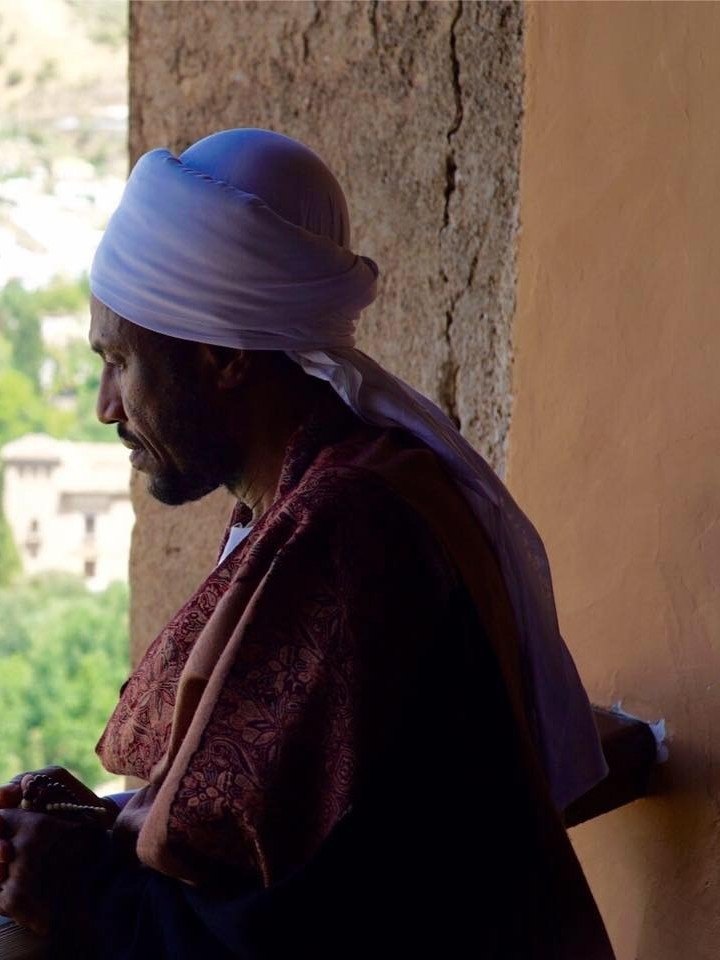
Sheikh Babikir Ahmed Babikir is a highly respected scholar with a deep understanding of the Islamic sciences.
Originally from Sudan, Sheikh Babikir is a descendant of Sayyiduna al-‘Abbas ibn ‘Abd al-Muttalib (رضي الله عنه) through his father and Sayyiduna Abu Bakr as-Siddiq (رضي الله عنه) through his mother. From a young age, he was initiated into the Sammaniya Sufi order, later receiving the highest honour of being granted ijazah (formal permission to teach) by Sheikh al-Fatih Qaribullah (رحمه الله), a distinguished scholar whose lineage of teachers traces back to the Prophet Muhammad ﷺ.
His spiritual journey continued as he was also granted ijazahs by other esteemed scholars, including Sheikh Salih al-Jaʿfari (رحمه الله), Sheikh Nazim al-Haqqani (رحمه الله), and Sheikh Muhammad ibn ‘Alawi al-Maliki (رحمه الله). Alhamdulilah, through his teachers, he has studied through authentic chains of transmission the sciences of Tafsir (Qur’anic interpretation), Aqida (theology), Hadith (prophetic traditions), Seerah (the life of the Prophet ﷺ), Maliki Fiqh (jurisprudence), Ta’wil al-Ahadith (dream interpretation), and Tasawwuf (Islamic spirituality).
Since arriving in Britain in 1977, Sheikh Babikir has worked tirelessly to promote Islam’s spiritual message in the UK. He played a key role in organizing programs at London Central Mosque in Regent’s Park and Muslim Welfare House in North London, where he first met His Majesty, King Charles III. At the request of His Highness, he later served on the board of Mosaic, a charitable initiative founded by King Charles III.
Alongside his religious scholarship, he pursued academic studies, earning a B.Ed in Mathematics from Greenwich University, along with certifications in Personnel Management and Administrative Management.
His life’s work has been deeply rooted in the Islamic principle of Khidmah (service). Whether through education, charity, or public engagement, Sheikh Babikir has consistently embodied the belief that true faith is demonstrated through serving others. His initiatives are always aimed to uplift communities and bring people together – remind us that Islam’s spiritual message is not just personal, but social and community based.
He served for many years as the Head Imam of Islamia School, the UK’s first Islamic school, and has contributed to the establishment of dozens of Islamic Schools in the UK and abroad – championing holistic, values-based education rooted in Islamic nurturing.
Sheikh Babikir is the Founder of Rumi’s Cave, a vibrant community hub in North-West London, and Ulfa Aid, an international humanitarian relief charity. He has since retired from his official roles at both. He also serves as the Khateeb of The Mosque and Islamic Centre of Brent (also known as Cricklewood Mosque), where he delivers the Friday sermon to a large and diverse congregation. Loved for his warmth, wisdom, and eloquence, he continues to share his message of compassion and mercy, inspiring audiences across the UK and beyond.